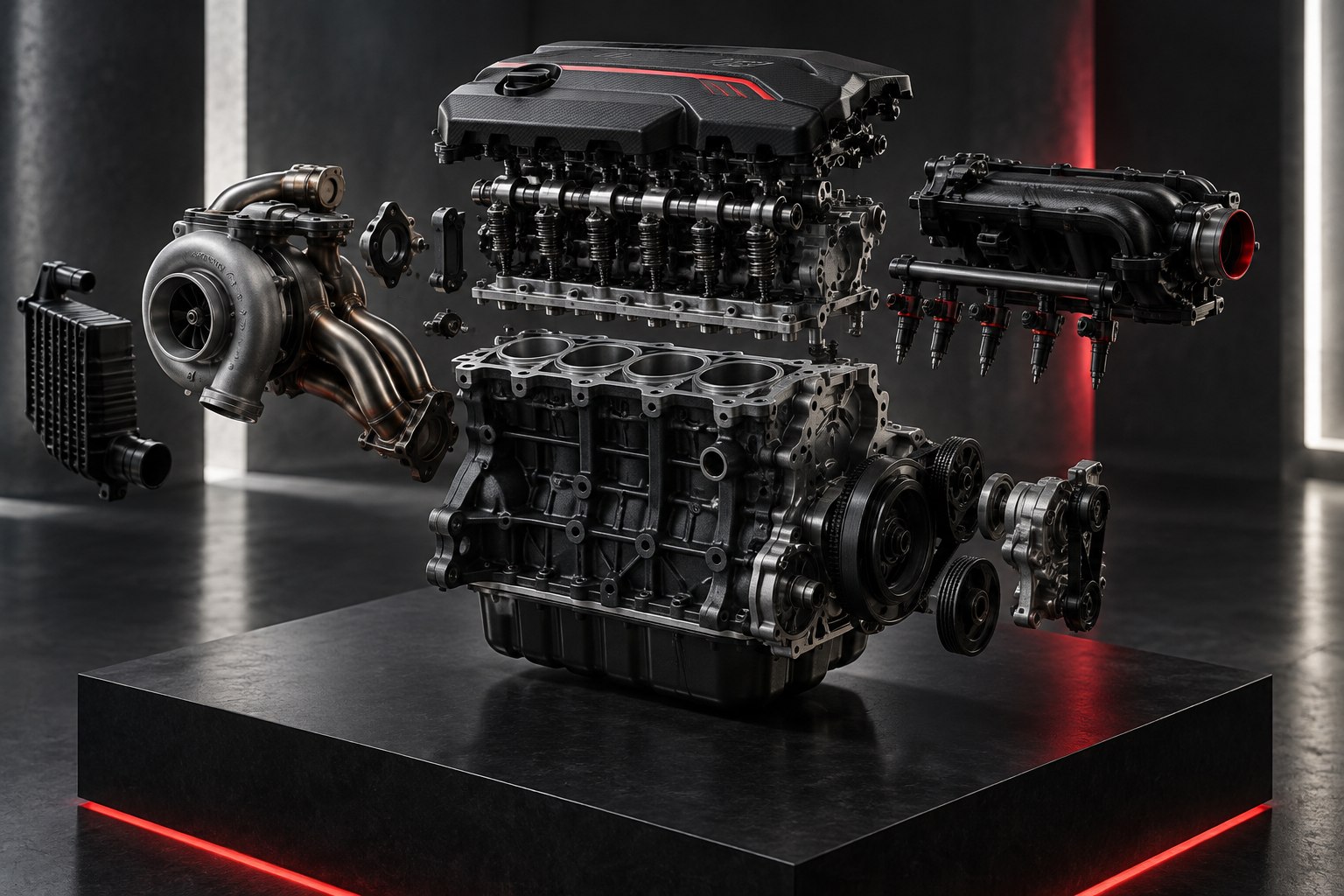
Repairing your engine or building for more power.
A damaged engine needs a different approach from a healthy one being strengthened. We assess condition and discuss use before recommending parts.
Why VAG Performance Chip
- VAG expertise
- Knowledge of Volkswagen, Audi, SEAT, Škoda and CUPRA.
- Your car comes first
- We consider the engine, gearbox and fitted parts.
- Software and fitting
- From engine tuning to suitable parts and DSG tuning.
- Workshop in Ridderkerk
- One location for diagnosis, fitting and checks.
Repair and strengthening are different choices
Rebuilding or repair addresses damage, wear and required remedial work. A reinforced build selects parts for higher load. These may overlap, but extra parts do not replace inspection.
The engine family guides the work
EA113, EA888 and other VAG engines differ in construction. Engine codes, injection, turbos and timing systems can also differ within a family. We assess the exact engine and its condition before finalising parts advice.
Choose components after inspection
Wear, dimensions and intended use determine the components needed for an engine build, including pistons, connecting rods and bearings. A power figure alone is not enough to choose them.
Tell us how you want to use the car
Daily driving, spirited road use and sustained track loads call for different choices. Discuss your requirements, existing components and budget before the engine is built, so the proposal addresses the whole project.
A proposal in clear stages
Unknown damage may require inspection before a full price is possible. We discuss inspection, parts, machining, assembly and tuning separately so the agreed work and outstanding decisions are clear.
Engine builds
Which engine build suits your plans?
EA888 Gen 3 engine build for daily use
Do you want to repair your EA888 Gen 3 or prepare it for more power? We review the engine code, wear and desired driving behaviour before deciding which parts can remain and which need replacing. Smooth response, maintenance and suitable torque delivery matter for daily use. The quote sets out the inspection, assembly and software work required for your engine.
- ✓Condition assessment and inspection after disassembly
- ✓Pistons and rods selected for measurements and intended use
- ✓Review bearings, fasteners and seals
- ✓Check lubrication and cooling
EA888 evo4 engine build for increased power
Extra power from an EA888 evo4 must suit the turbo, fuel supply and gearbox. We start with intended use and current engine condition. Internal parts are selected after inspection and a build plan. Cooling and the availability of engine and gearbox software are discussed too; a parts package alone does not complete the project.
- ✓Discuss intended use, output and fuel
- ✓Select internal parts after inspection and measurement
- ✓Assess turbo and air supply capacity
- ✓Match fuel supply and cooling
DAZA / DNWA engine build for track use
Repeated high load places different demands on a five-cylinder engine than a short road acceleration. For DAZA and DNWA engines, we discuss track use, desired performance and fitted parts. Inspection determines which components can be reused. Lubrication, cooling and fuel supply belong in the same build plan, with agreed running-in and checks under load.
- ✓Inspect initial condition and cylinders
- ✓Match crankshaft, rods and pistons to intended use
- ✓Check cylinder head and valvetrain
- ✓Assess lubrication, fuel supply and cooling
EA113 rebuild and strengthened engine build
A worn or damaged EA113 first needs investigation into the cause. A rebuild restores the engine; strengthening can additionally prepare it for a different power target. We separate these tasks in the proposal. After inspection, we discuss parts, dimensions and cost. The turbo, fuel supply and final engine settings must suit the assembled engine.
- ✓Compression and leak-down testing where needed
- ✓Inspect engine block and cylinder head
- ✓Select parts from measurement results
- ✓Assess fuel supply, ignition and turbo
From intake to delivery
How we approach the work.
-
01
Discuss engine and goal
Tell us symptoms or damage, known engine code, changes and intended use.
-
02
Inspect and estimate
We assess condition and discuss parts, machining and cost.
-
03
Build and hand over
Agreed assembly, fitting and checks are carried out; tuning and use instructions depend on the plan.
Frequently asked questions
What else would you like to know?
Can you quote without inspection?
Not always when damage or wear is unknown. We first agree on inspection and its cost.
Does Stage 1 require a reinforced engine?
Not as standard. It depends on the engine, condition and load. Engine building is a separate service.
What determines the lead time?
Inspection, parts, machining, fitting and tuning. A schedule follows once these are clear.
Continue exploring
Explore the next step.
Stage 3
Turn a power target into a complete vehicle configuration.
Technical files
See how routes are documented transparently.
Engine build intake
Tell us about your engine, existing modifications and how you use the car.
EA113 or EA888: where does a sound engine-build plan start?
A strong engine starts with more than a parts list. Connect engine identification, condition, intended use and performance goals to a considered build plan.
Engine building starts with an intake