VAG development
VAG development: measure before making changes.
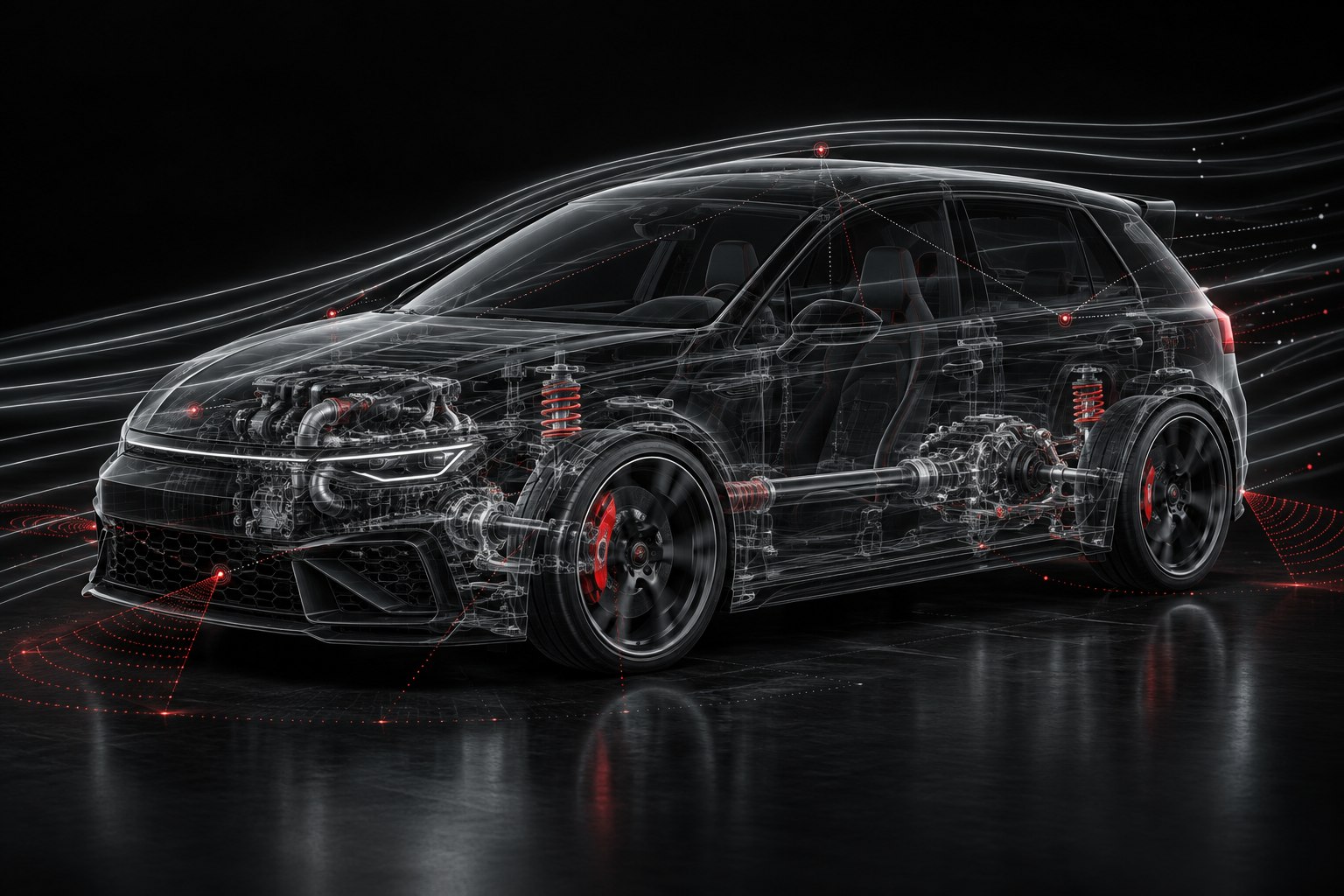
Why is a temperature rising? Does a hardware combination work as intended? Is a new programming method usable? Questions like these guide our software and hardware development.
Why VAG Performance Chip
- VAG specialism
- More than 15 years of experience with Volkswagen Group engineering.
- Matched to your car
- Software version, engine condition, hardware and intended use are assessed together.
- Software and hardware
- ECU, DSG/TCU and performance components form one technical system.
- In-house workshop
- Diagnostics, installation and technical checks at our Ridderkerk facility.
What is VPC Development?
A focused question makes the data useful.
In development, the solution is not known from the outset. We record the starting point, choose the relevant measurements and compare behaviour before and after a change. The work may concern software access, engine calibration or a component's operation. Fuel, temperature and test conditions belong in that comparison; without them, a difference can be difficult to explain.
From logging to insight
A graph gains meaning only with configuration, time and measurement conditions.
Requested and achieved values are compared over time and under appropriate load. The relevant channels differ for each question; more signals do not automatically produce a better conclusion. Fuel, temperature, software version, hardware status and test cycle therefore belong with every comparison.
Software, hardware and protocols
New support becomes an application only after identification and practical verification.
An announcement about ECU or TCU access does not prove that every vehicle variant can be supported immediately. Hardware and software identification, the read and write method, recovery route and vehicle mapping must all be correct. The same applies to new hardware: fitment alone does not yet show how the component affects the complete configuration.
Practical development route
Not every technical question needs to become a full development project.
Share the vehicle identification, current configuration, available logs, symptom or hypothesis and the desired decision point. During intake, we determine whether regular diagnostics, calibration or installation is sufficient. A development scope covering responsibilities, data use, any confidentiality, price and scheduling is created only when separate measurement cycles, iterations or new validation are required.
From intake to delivery
How we approach the work.
Why is a temperature rising? Does a hardware combination work as intended? Is a new programming method usable? Questions like these guide our software and hardware development.
-
01
Inventory
Vehicle, software version, hardware, fuel and intended use are documented.
-
02
Technical check
Diagnostics and identification establish whether the basis is suitable and which route is available.
-
03
Configuration
Software, DSG and any required hardware are selected as one coherent package.
-
04
Execution
Work is completed in-house or planned within the agreed specialist route.
-
05
Validation
Operation is checked and the completed configuration remains linked to the vehicle.
Frequently asked questions
What else would you like to know?
Which projects fall under VPC Development?
New ECU or TCU access, software validation, hardware combinations, thermal questions and other measurable vehicle problems can form a development route.
Can I submit a development question as a customer?
Yes. During intake, we first determine whether regular diagnostics, tuning or installation is sufficient. Only a question requiring separate measurements or iterations receives a development scope.
Which data is collected during development?
Only data relevant to the agreed question. The required signals and conditions vary by vehicle, control unit, component and test method.
How is a result approved?
Measurement values, test conditions and acceptance criteria selected in advance determine whether a change is sufficiently substantiated. One isolated peak value without comparable context is not enough.
Do you publish all measurement data?
No. Only information with sufficient technical context that does not conflict with customer privacy, safety or supplier confidentiality can be published. Publication and project delivery are separate decisions.
How are cost and lead time determined?
A proposal follows once the question, baseline, measurement method, iterations and any partner facilities have been defined. Research outcomes are not treated as certainties in the price or schedule beforehand.
From technical question to test plan